
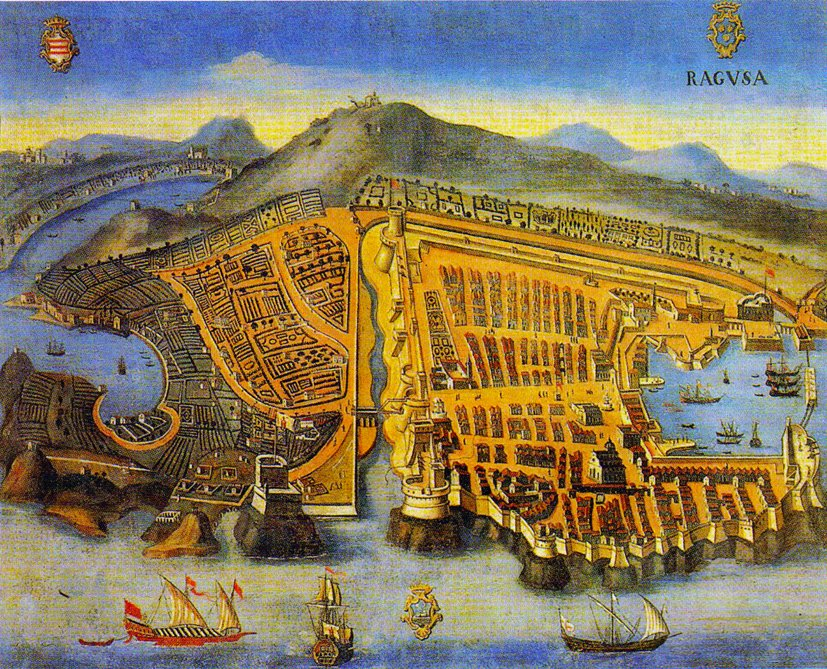
A City of Liberty, Diplomacy, and Enduring Grace
There are places whose beauty is inseparable from their history, and Dubrovnik — the former Republic of Ragusa — is one of them. Beyond its polished marble streets and Adriatic sunsets lies a past as complex and dignified as the city itself: a republic that once stood proudly between great powers, mastering the art of survival through diplomacy, intelligence, and quiet strength.
When I lived in Dubrovnik, I found myself captivated not only by the sea or the light, but by the echo of what this city once was. I remember reading a historical book about the Republic of Ragusa — and discovering, page after page, a fascinating story of resilience and balance. The title of the book was: Wisdom at the Crossroads: True Stories From the Time of the Republic of Dubrovnik and the Ottoman Empire, written by Vesna Miović.
The Birth of a Maritime Republic
The Republic of Ragusa flourished between the 14th and 19th centuries, when Dubrovnik became a maritime and mercantile power that rivaled Venice. Its rise was guided not by military strength, but by an extraordinary ability to navigate the volatile politics of the Mediterranean world.
From its harbors, elegant merchant ships set sail across the Adriatic, the Aegean, and beyond — carrying salt, silks, and knowledge. Trade was the republic’s lifeblood, and diplomacy its greatest art. Ragusa became known for its neutrality and for its unwavering defense of liberty.

Between Venice and the Ottoman Empire
Nestled between the ambitions of the Venetian Republic and the Ottoman Empire, Ragusa became a master of balance. While Venice relied on naval might and the Ottomans on territorial expansion, Ragusa’s strength lay in subtle diplomacy.
The city paid tribute to the Sultan of the Ottoman Empire to ensure protection, yet simultaneously cultivated alliances with Western Europe. This delicate duality allowed the small republic to remain autonomous for centuries — a remarkable political success in an era defined by conquest and empire.
Its motto, Non bene pro toto libertas venditur auro — Liberty is not sold for all the gold in the world — still echoes through its walls, carved in Latin letters that once adorned its official seals and documents. It is perhaps the purest reflection of Ragusa’s identity: proud, pragmatic, and deeply devoted to freedom.

A City of Diplomats, Scholars, and Poets
The republic’s wealth was not only material but intellectual. Ragusa became a hub for diplomacy and literature, home to poets, scholars, and explorers. The city’s archives — still preserved today — reveal a society governed by foresight, equality before the law, and respect for culture.
Its architecture reflects that same balance: refined Renaissance palaces standing alongside defensive fortifications, an aesthetic harmony between beauty and endurance. Walking along Stradun Street, one can sense the silent dignity of a city that prospered not through domination, but through wisdom.
The Fall and the Legacy
The Republic of Ragusa’s independence came to an end in 1808, when Napoleon’s forces annexed it into his empire. Yet its spirit endures — not as nostalgia, but as a lasting lesson in diplomacy and cultural refinement.
Even today, the stones of Dubrovnik whisper the same timeless truth: that liberty, intelligence, and culture can be stronger than any army. The Adriatic wind still carries echoes of Ragusa’s golden age, and perhaps, if you pause to listen, you will hear the voice of the republic that defied empires.


Author’s Note
This piece was inspired by my time living in Dubrovnik and by a historical book I read there about the Republic of Ragusa. It was during those quiet afternoons overlooking the Adriatic that I understood how history and place intertwine — and how deeply liberty can shape the soul of a city.

Leave a Reply