A Harmony Between Discipline, Nature, and Balance
In South Korea, longevity is not a coincidence — it is a way of life. The country has one of the highest life expectancies in the world, a fact that goes far beyond diet or healthcare. It is rooted in philosophy, balance, and respect for both body and spirit.
From the bustling streets of Seoul to the serene mountains of Jeju, Koreans have learned to integrate wellness into their daily rhythm. It is a silent art: the ability to live with purpose, eat with mindfulness, and age with grace.

The Wisdom of Balance
At the heart of Korean longevity lies the concept of Eum-Yang — the local interpretation of yin and yang. Life, according to this philosophy, must remain in balance: work and rest, tradition and innovation, body and soul.
This belief manifests in the simplest acts. Meals are designed to harmonize flavors and energies. Daily routines follow the rhythm of the seasons. Even the nation’s architecture — from hanok houses to Buddhist temples — is arranged to align with nature, not against it.
Well-being, in Korea, is not pursued through extremes but through moderation and consistency.
Food as Preventive Medicine
Korean cuisine is a quiet testament to the country’s approach to health. Rather than focusing on restriction, it emphasizes nourishment, diversity, and natural fermentation.
Kimchi, a fermented dish of cabbage and radish seasoned with chili, garlic, and ginger, is perhaps the most emblematic example. Rich in probiotics and antioxidants, it strengthens the immune system and supports digestion.
Meals often include a colorful array of banchan — small side dishes made from vegetables, tofu, or seaweed. Each ingredient contributes to balance: low in fat, high in nutrients, and full of flavor.
Even rice, often regarded as simple, becomes part of a larger philosophy of harmony. Combined with soups like doenjang jjigae (soybean paste stew) or samgyetang (ginseng chicken soup), it forms a complete and restorative meal.

Discipline and Daily Rituals
Beyond the plate, longevity in Korea is shaped by ritual. Morning routines begin with stretching, tea, or meditation. Many older Koreans walk for hours in the mountains, a habit that is both physical exercise and spiritual practice.
This connection with nature — especially mountain climbing — is deeply cultural. Korea is a land of peaks and trails, and its people consider time outdoors not merely recreation, but renewal.
Equally, social connection plays a vital role. Elders remain active within families and communities, preserving a sense of purpose and belonging. Respect for age is woven into Korean society; growing old is not feared, but honored.
The Power of Rest and Skin Rituals
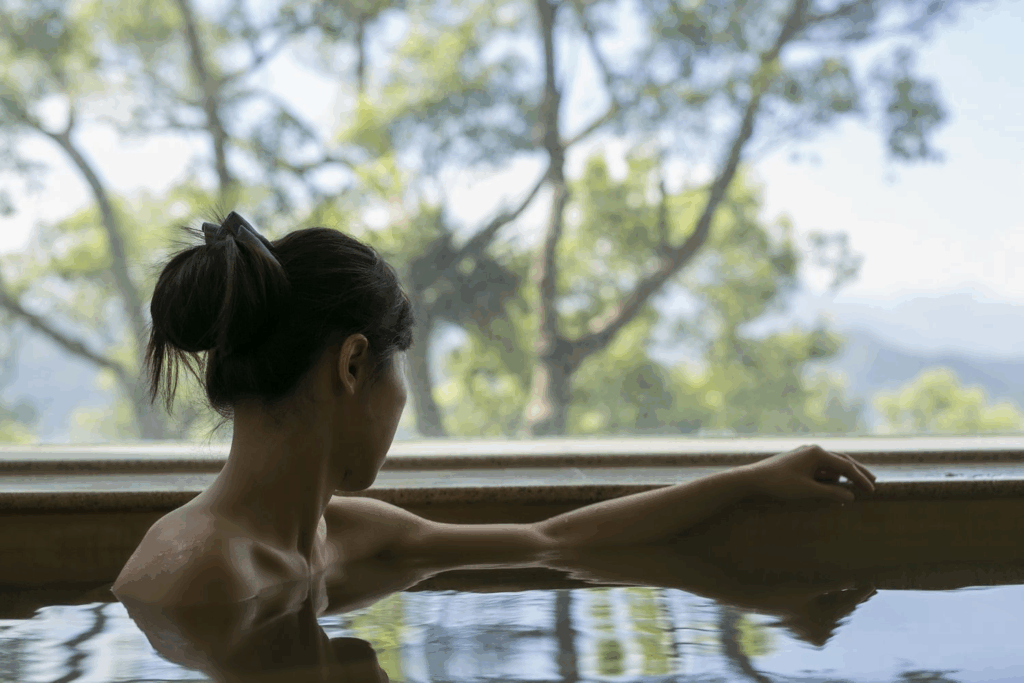
Modern Korea, for all its technological pace, has not abandoned the importance of rest. Practices such as visiting jjimjilbangs — traditional bathhouses — offer communal relaxation through saunas, mineral baths, and exfoliation rituals.
Korean skincare, admired worldwide, also reflects a deeper cultural value: self-care as a form of respect. The renowned multi-step routine is less about vanity and more about ritual — time dedicated to oneself, to patience, to care.
Longevity as Lifestyle
Ultimately, the secret to South Korean longevity is not a single discovery but a collective mindset. It lies in the quiet moments — the cup of green tea at dawn, the hike through misty trails, the shared laughter over a bowl of hot soup.
In Korea, health is not achieved through excess or deprivation. It is found in balance: between body and mind, tradition and modernity, solitude and community.
It is a life lived slowly, deliberately, and with gratitude — the true key to living long, and living well.
Leave a Reply