
On a discreet corner of Madrid, just steps from the restless grandeur of Gran Vía, there exists a small shop where time moves differently. Behind its glass windows, wrapped in shades of lilac and gold, the scent of sugar and flowers lingers in the air. This is La Violeta, one of the city’s most cherished institutions, where candy is not merely confection but history crystallized into violet-tinted sweetness.
For more than a century, La Violeta has transformed a simple flower into an emblem of Madrid. To enter its doors is to step into a living postcard from another era.
1. The Birth of a Symbol in a Changing City
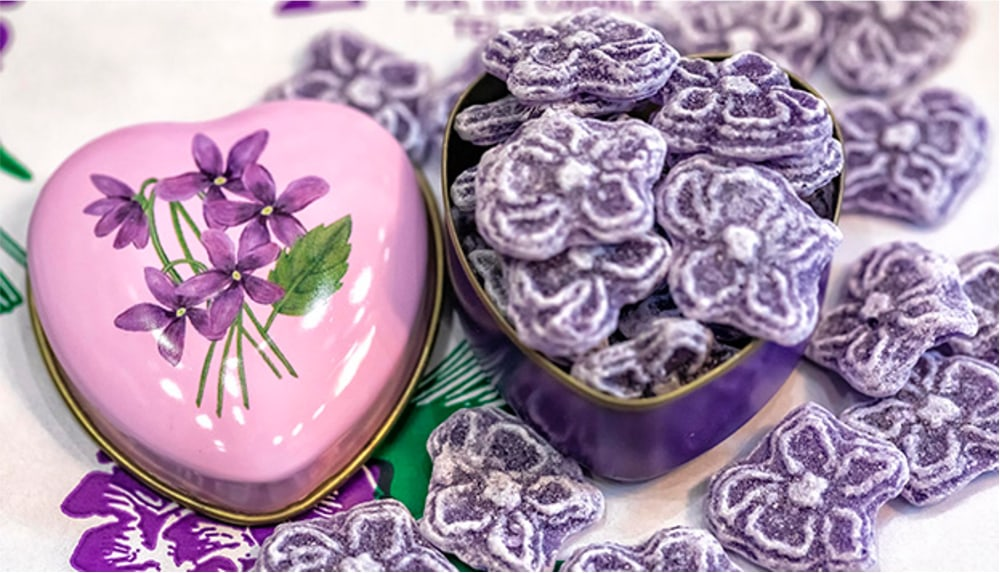
La Violeta opened its doors in 1915, at a time when Madrid was redefining itself as a modern European capital. Automobiles were appearing on the streets, grand avenues were replacing narrow medieval lanes, and cafés had become the epicenters of political and artistic life. In this evolving city, La Violeta quietly began crafting its signature delicacy: violet-flavored candies made from real flower extract.
The violet had long been associated with Madrid’s aristocratic gardens and springtime promenades. By capturing its aroma in sugar, the shop distilled an entire season of the city into a single, delicate sweet.
From the beginning, La Violeta was not simply a candy store. It was a gesture of refinement in a rapidly modernizing Madrid.
2. The Royal Seal of Approval
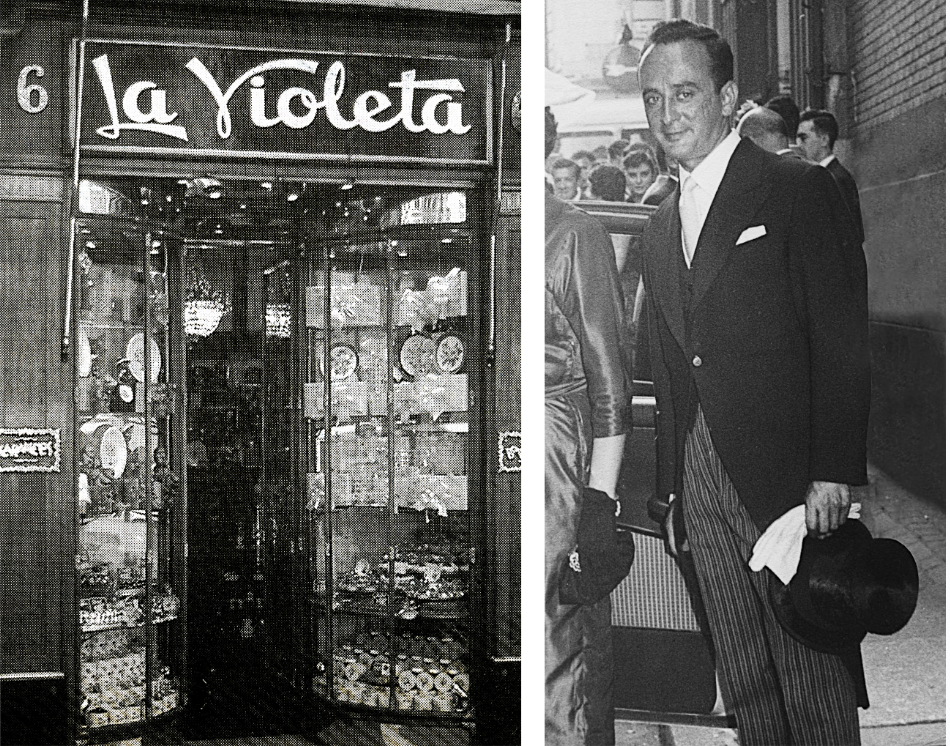
The reputation of La Violeta grew quickly, spreading far beyond the elegant women and families who first frequented the shop. Its defining moment came when King Alfonso XIII developed a particular fondness for the violet candies and began sending them as diplomatic gifts to European courts.
With royal patronage came international recognition. The candies of La Violeta traveled far beyond Spain, carried in silk-lined boxes to Paris, Vienna, and Rome. What began as a small artisanal workshop became a discreet ambassador of Madrid’s identity.
The shop earned its place as an official supplier to the Royal Household, a distinction that confirmed what locals already knew: these were not ordinary sweets. They were symbols.
3. A Shop That Defied Time
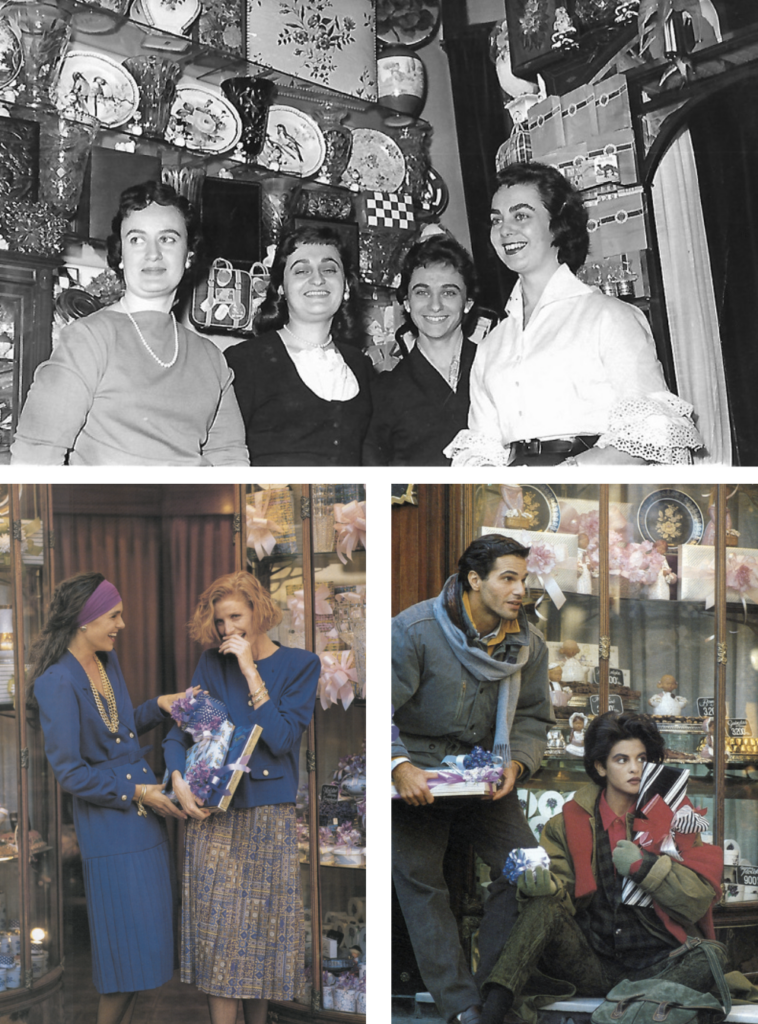
While Madrid transformed through civil war, dictatorship, democracy, and globalization, La Violeta remained remarkably unchanged. Its original wooden counters, glass jars, and hand-wrapped packaging have survived decades of social upheaval.
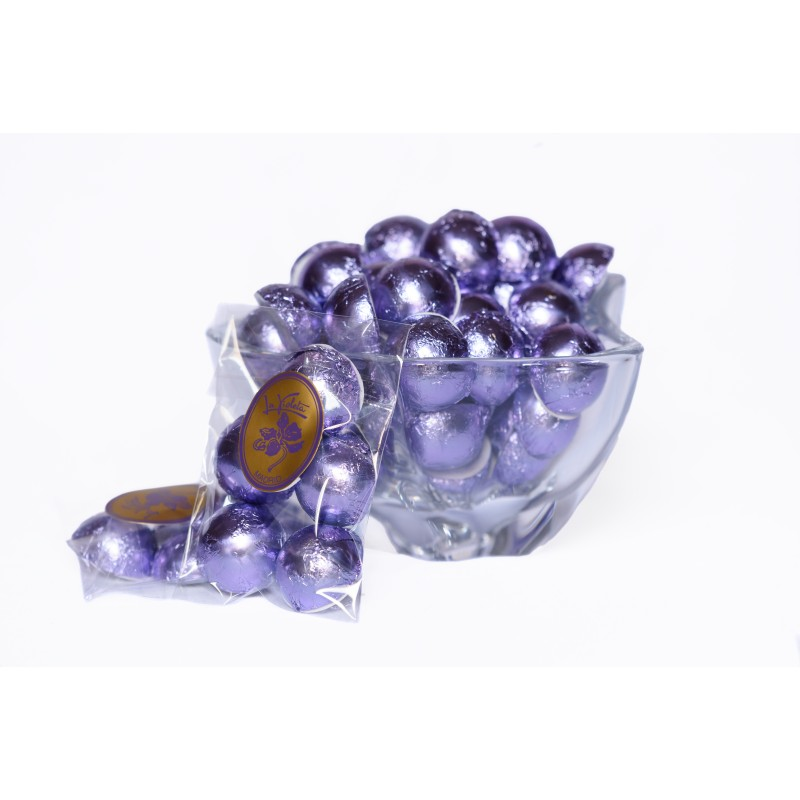
Inside, nothing feels rushed. The candies are still wrapped by hand in translucent lilac paper. The boxes still bloom with painted violets and gilded lettering. The ritual of purchase remains unhurried, almost ceremonial.
In a city that moves at modern speed, La Violeta offers resistance through slowness. It preserves not just a flavor, but a way of living.
4. The Violet as Madrid’s Secret Flower
The violet is not the official symbol of Madrid, yet it is quietly one of its most recognizable. For generations, Madrileños have associated the flower with spring festivals, Sunday strolls, and old city gardens. La Violeta transformed that collective memory into an edible keepsake.
Today, the shop still sells its classic caramelized violets, along with violet liqueurs, syrups, and perfumes. But the candy remains the heart of its identity, unchanged in recipe and spirit for more than a century.
To taste one is to encounter a flavor that feels almost unreal. Floral, perfumed, fragile. It does not shout. It whispers.
5. A Pilgrimage for Travelers
For travelers who move beyond monuments and museums, La Violeta becomes a quiet pilgrimage site. Writers, artists, and curious visitors step inside seeking something increasingly rare: authenticity untouched by trend.
The shop’s location near Gran Vía places it at the crossroads of tourism and tradition. Yet despite the crowds outside, inside remains intimate. A few steps across the tiled floor, a brief exchange at the counter, the soft sound of paper folding. The experience is fleeting, but it lingers long after.
Many visitors leave with small purple boxes tucked into their bags like fragile souvenirs of another century.
6. Sweetness as Cultural Archive
La Violeta stands as proof that heritage is not always grand architecture or official monuments. Sometimes, it lives in sugar, scent, and repetition. In a city defined by layers of empires, wars, and reinvention, this modest shop has become an archive of continuity.
Its candies are eaten in moments of celebration and nostalgia. They are offered to guests, sent as gifts, carried across oceans by those longing for Madrid. In that way, La Violeta extends far beyond its narrow walls.
It is not merely a store. It is a memory that can be tasted.
A Literary Companion: “Madrid, an Intimate History” by Andrés Trapiello
For those who wish to understand the emotional layers of Madrid beyond its monuments, Madrid, an Intimate History by Andrés Trapiello offers a sensitive portrait of the city’s everyday soul. Through cafés, streets, traditions, and forgotten corners, the book echoes the same quiet continuity that defines La Violeta.
It reveals a Madrid made not only of kings and revolutions, but of small rituals that endure.
Source: Editorial Pre-Textos
The Perfume of Time
In a world obsessed with reinvention, La Violeta remains faithful to what it has always been. It does not chase novelty. It preserves essence.
To visit La Violeta is to take part in a century-long ritual. It is to taste a flavor that once delighted kings and still softens the step of passersby today. It is to understand that cities are not only built of stone and steel, but also of sugar, scent, and memory.
And in Madrid, memory sometimes tastes faintly of violets.
Leave a Reply