
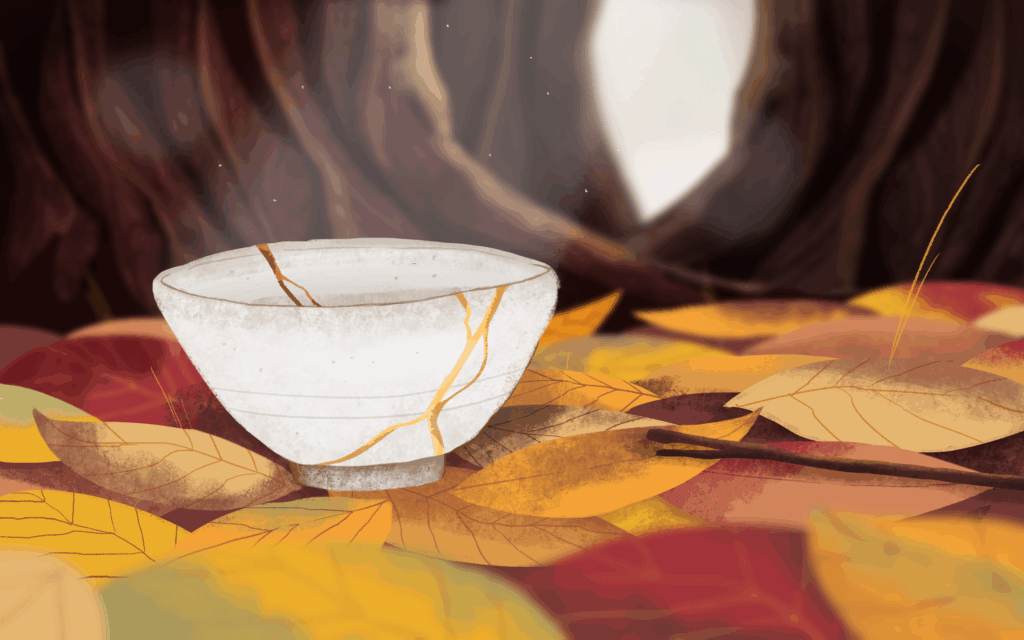
In a world where perfection is often sought after, there’s a beautiful philosophy that encourages us to embrace imperfection, to celebrate the cracks, chips, and flaws that make things uniquely ours. In Japan, this philosophy has a name: Wabi-Sabi. It’s the art of appreciating the beauty in imperfection, and it extends beyond just a way of thinking—it influences everything from architecture to pottery, and even the very act of repairing broken things. The practice of fixing broken things in Japan is not just about restoration; it’s about transformation, and one of the most iconic ways this manifests is through Kintsugi—the art of golden joinery.
The Philosophy Behind the Break
At the core of Wabi-Sabi is the idea that beauty exists in the fleeting, the temporary, and the imperfect. It acknowledges that everything—whether a person, an object, or a moment—will inevitably change. With time, things will break, wear out, and fade, but rather than discarding them, Japanese culture teaches us to repair, restore, and cherish the marks of age.
In a way, the cracks and imperfections that come with time tell a story—an unspoken narrative of life lived. Rather than trying to erase the past, Japan invites us to appreciate it. And this philosophy reaches its most stunning expression through the intricate art of Kintsugi.
Kintsugi: The Golden Touch
Imagine breaking a delicate porcelain teacup—its handle shattering, leaving jagged edges and cracks running through its fragile body. In most cultures, this might be seen as the end of the object’s life. But in Japan, it’s just the beginning of something new.
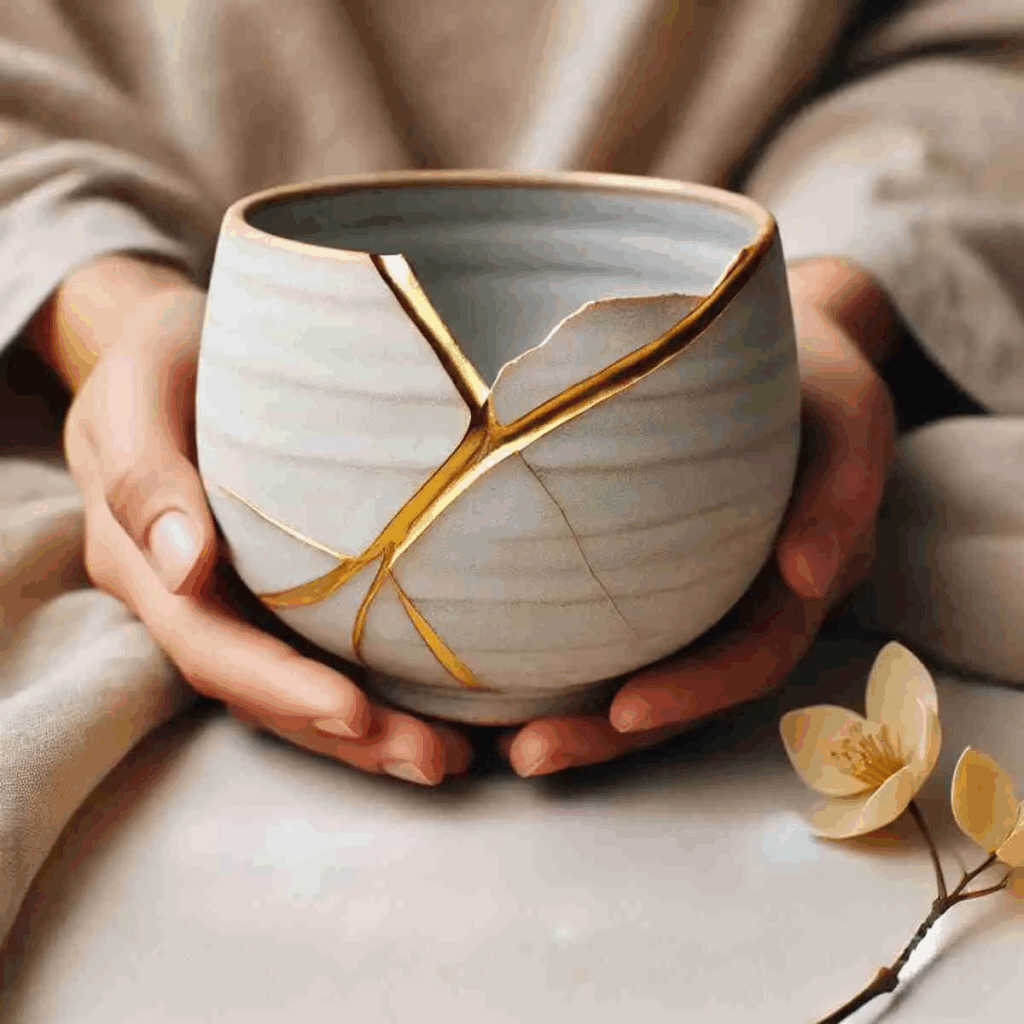
Kintsugi literally means “golden joinery,” and it’s the process of repairing broken pottery with lacquer mixed with gold, silver, or platinum. The cracks aren’t hidden; rather, they’re highlighted, celebrated. The result is a stunning work of art where the flaws become part of the object’s beauty, rather than detracting from it.
It’s almost as if the object has been reborn. The golden seams symbolize resilience, growth, and a beautiful acceptance of the inevitable passage of time. The process of Kintsugi transforms the brokenness into a new form of wholeness—a new, deeper kind of perfection.
Kintsugi and the Symbolism of Repair
The act of repairing broken things in Japan goes beyond aesthetic appeal—it’s profoundly philosophical. Kintsugi teaches that brokenness is not a tragedy to be mourned, but a natural part of life that can be embraced. Each crack represents a journey, and each repair is a celebration of resilience and the beauty of healing. It’s a reflection of how life itself works—nothing stays pristine forever, but the beauty lies in the ways we grow and adapt along the way.
In fact, many consider Kintsugi to be a metaphor for the human experience. The way we deal with personal setbacks, heartbreaks, and challenges reflects the very essence of this practice. Just as broken pottery can be mended with golden seams, so too can our lives be patched together with wisdom, strength, and beauty.
Embracing the Imperfect
But Kintsugi and Wabi-Sabi aren’t just reserved for broken pottery. They can be applied to our everyday lives as well. The practice of looking at imperfections with compassion and understanding isn’t only something we do to physical objects—it’s a mindset that can be carried into how we view our relationships, our experiences, and even ourselves.
In a world that often strives for flawlessness, the Japanese approach reminds us that imperfection is not something to fix, but something to celebrate. After all, the very things that make us different—whether it’s a scar on our skin, a broken heart, or an old, well-loved piece of furniture—hold their own unique beauty. Kintsugi teaches us that there’s no need to hide our flaws. In fact, we should wear them proudly, for they are the marks of a life well lived, a story worth telling.

The Takeaway: A New Perspective on Brokenness
So the next time something breaks—whether it’s a favorite dish or a cherished memory—take a moment to think about Kintsugi. Rather than rushing to fix it or discard it, consider how you can transform the brokenness into something beautiful. After all, it’s in the cracks that we often find the most profound beauty, the most remarkable growth, and the deepest connection.
Embrace the art of fixing broken things, not as a way to erase the past, but as an opportunity to create something entirely new—something richer, more meaningful, and, in its own way, even more beautiful. In the world of Kintsugi, the broken things we fix don’t just go back to their original state—they become works of art, imbued with a golden resilience that radiates far beyond their original form.
Isn’t that what we’re all striving for?
Leave a Reply