In the mist‑shrouded hills and ancient woodlands of Galicia, a legend persists that moves through the land with quiet inevitability and profound cultural resonance. This is the tale of the Santa Compaña, an otherworldly procession of souls that walks between sunset and dawn, bridging the seen and unseen. More than folklore, the Santa Compaña lives in the collective memory and identity of Galician communities, echoing themes of fate, vigilance and the thin veil between life and death.
A Procession Beyond Time
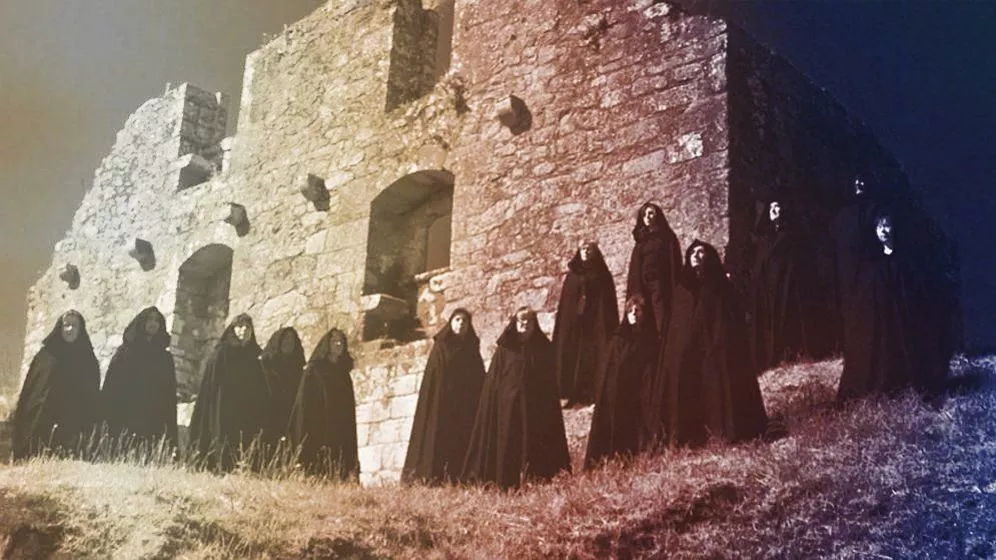
The Santa Compaña is said to appear as a lantern‑lit march of ghostly pilgrims. Led by a solitary bearer of a candle or cross, these silent figures walk through villages, along country lanes and across lonely fields. Their pace is unhurried, their presence solemn. They are neither malevolent nor playful spirits; they are keepers of a somber duty, bound to wander in search of souls yet to cross over.
According to tradition, if a living person encounters the Santa Compaña at night, they risk being drawn into its ranks. To avoid this fate, a person must transfer the symbolic burden — the candle or cross — to someone else without that person becoming aware. Should they fail, they may fall under a haunted influence, compelled to wander until dawn or beyond.
Roots in Celtic and Christian Worlds
The legend of the Santa Compaña reflects the deep cultural layering of Galicia, where Celtic heritage and early Christian belief entwine. Galicia, with its rolling green landscapes, fog‑laden forests and megalithic sites, shares resonances with other ancient Celtic lands. The spiritual geography evokes a sense of animism — the idea that the land itself is alive with spirit — while later Christian narratives overlaid themes of penance, soul‑guarding and divine mercy.
In this fusion, the Santa Compaña becomes more than a ghost story. It represents a cultural understanding of the journey of the soul, of vigilance against spiritual oblivion, and of the moral weight carried by each living heart. In some regions, local prayers, blessings and ritual gestures are offered at dusk to guard against unwanted encounters, blending faith and folklore in ways that define Galician spiritual identity.
Voices of Tradition
For centuries the Santa Compaña was spoken of quietly in rural homes, hearthside conversations and midnight vigils. It was invoked in cautionary tales, in lullabies and in the vivid imagery of oral storytelling. Elders recounted sightings with solemnity rather than sensationalism, teaching younger generations respect for the mystery rather than fear.
Writers and poets of Galicia have preserved and reimagined the legend in verse and prose, capturing its atmospheric intensity and emotional depth. Though rooted in local tradition, the Santa Compaña resonates with universal themes of mortality, duty and the unseen forces that shape human life.
A Living Legend in Modern Galicia
Today the Santa Compaña remains a vibrant part of Galicia’s cultural fabric. It is celebrated in local festivals, explored in ghost walks that respect tradition, and reflected in art, music and theatre. Visitors to Galicia often find themselves drawn to the legend not as a Halloween curiosity but as an expression of the region’s longstanding relationship with mystery, landscape and spirit.
The ancient stone churches, misty cemeteries and shadowed paths of Galicia seem to echo with the memory of that silent procession. In a world that moves ever faster, the Santa Compaña stands as a reminder of the deep threads that connect people to land, to history and to the intangible realms of belief.
The Legend’s Echo
The allure of the Santa Compaña is not in fright but in reflection. It invites us to ponder the journey that every life makes, the unseen companions we carry in memory, and the courage it takes to walk through darkness toward light. For those who hear its story, the legend becomes a meditation on being present, being mindful, and honoring the past even as we step into the future.
Leave a Reply