
Each spring, Andalusia becomes the stage for one of Europe’s most extraordinary acts of collective devotion. La Romería de El Rocío is not merely a pilgrimage but a living ritual that blends faith, tradition, landscape, and identity. For a few days, roads, riverbanks, and sandy paths fill with pilgrims moving toward a small village on the edge of the Doñana wetlands, guided by belief, music, and memory.
El Rocío is not about arrival alone. It is about the journey itself.
Origins of a Devotion
The devotion to Our Lady of El Rocío, also known as the Blanca Paloma, dates back to the late Middle Ages. According to tradition, a hunter discovered a Marian image in the marshlands near present-day El Rocío. Over time, this image became an object of deep veneration, especially among rural communities whose lives were shaped by land, seasons, and uncertainty.
By the seventeenth century, organized brotherhoods known as hermandades had formed across Andalusia and beyond. These groups formalized annual pilgrimages, transforming a local devotion into a regional event of remarkable scale.
The Pilgrimage Route
Pilgrims travel on foot, horseback, or in decorated wagons, following ancient routes through countryside, forests, and river crossings. Each hermandad has its own itinerary, rituals, and symbols, often carrying a richly adorned standard known as the simpecado.
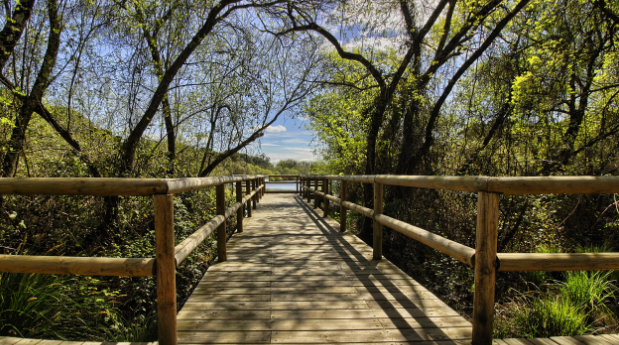
The crossing of the Guadalquivir River at Bajo de Guía and the passage through the sandy paths of Doñana National Park are among the most symbolic moments of the pilgrimage. These landscapes shape the rhythm of the journey and reinforce the sense of humility and endurance that defines El Rocío.
Music accompanies every step. Sevillanas rocieras, drums, and spontaneous singing create an atmosphere that is joyful yet reverent, festive yet deeply spiritual.
El Rocío Village and the Sanctuary
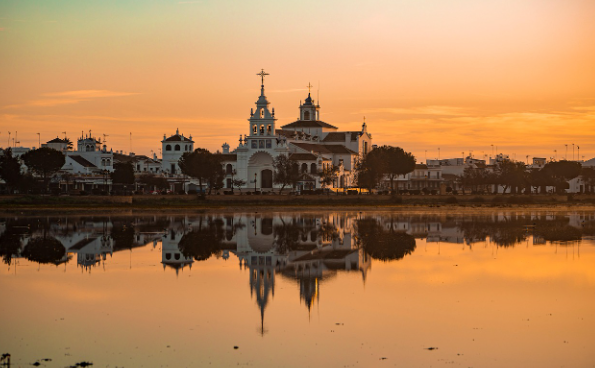
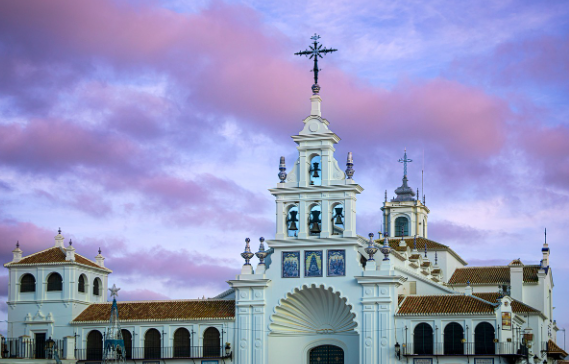
The village of El Rocío, with its sandy streets and whitewashed façades, becomes the epicenter of devotion during the pilgrimage. At its heart stands the Sanctuary of Our Lady of El Rocío, where the Virgin awaits her faithful.
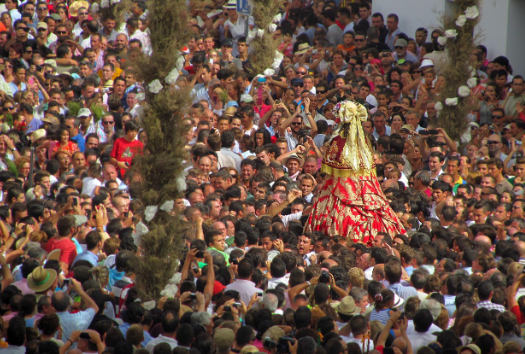
On the night of Pentecost, the atmosphere shifts. Thousands gather in anticipation of the most intense moment of the pilgrimage, when the Virgin is taken from the altar and carried through the crowds. This event, known as the salto de la reja, is marked by emotion, silence, and fervent prayer, as selected members lift the image and guide her through the sanctuary and village.
Faith, Identity, and Community
El Rocío is a profound expression of collective faith. Families return year after year, passing devotion from generation to generation. Brotherhoods maintain centuries-old customs, reinforcing bonds of belonging that transcend geography or social class.
For many pilgrims, El Rocío is a moment of promise, gratitude, or petition. Some walk in silence. Others celebrate with song and dance. Together, they create a ritual that holds space for both personal reflection and communal joy.
A Living Tradition in the Modern World
Despite its medieval roots, El Rocío remains a living and evolving tradition. Modern pilgrims balance devotion with environmental awareness, as the pilgrimage crosses one of Europe’s most fragile ecosystems. Efforts to protect the Doñana wetlands now form part of the conversation surrounding the event, reminding participants that faith and stewardship are inseparable.
The pilgrimage also attracts observers and travelers drawn by its cultural significance. For those who witness it respectfully, El Rocío offers insight into a way of life where spirituality is not confined to interiors but expressed through movement, landscape, and shared experience.
The Meaning of El Rocío
La Romería de El Rocío endures because it speaks to something timeless. It reminds us that faith can be walked, sung, and carried across open land. That devotion does not always require silence, but sincerity. And that sometimes, the most meaningful journeys are those taken together.
El Rocío is not a spectacle. It is a pilgrimage of the soul, written in dust, song, and faith.
Leave a Reply