
Where Don Quixote Found His Windmills
The story of El Quijote—one of the most celebrated novels in world literature—is inseparable from the landscapes of La Mancha, Spain. Around the province of Cuenca, rolling plains, ancient windmills, and rugged hills create a stage where imagination and reality collide.
It’s here that Miguel de Cervantes set his timeless tale of a knight errant who tilts at windmills, chasing ideals as vast as the horizon itself.
The Windmills: Guardians of the La Mancha Plains
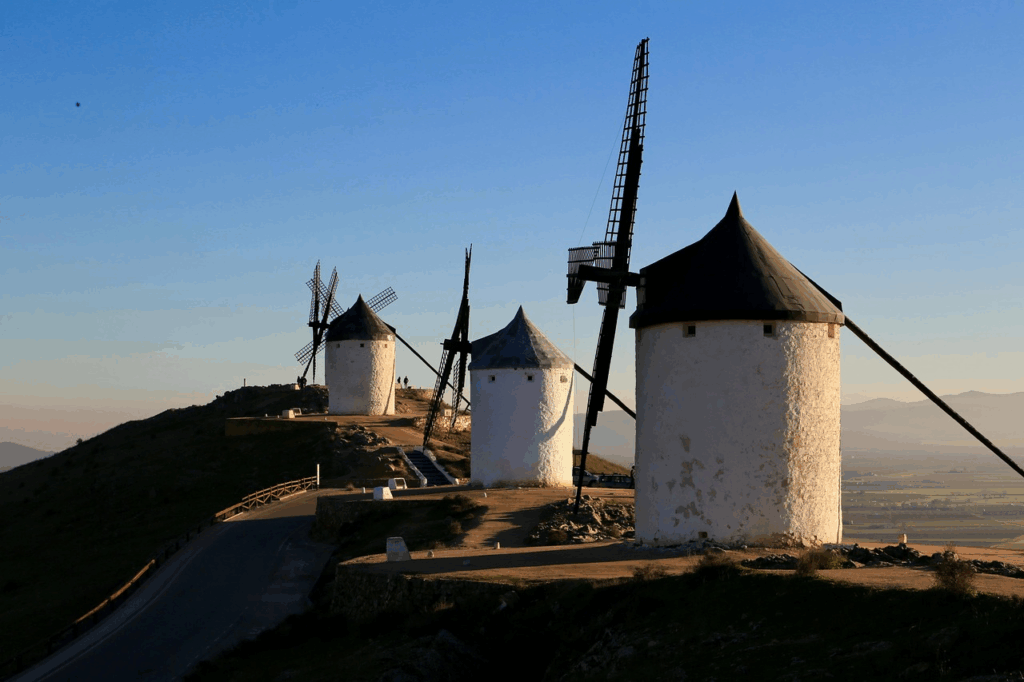
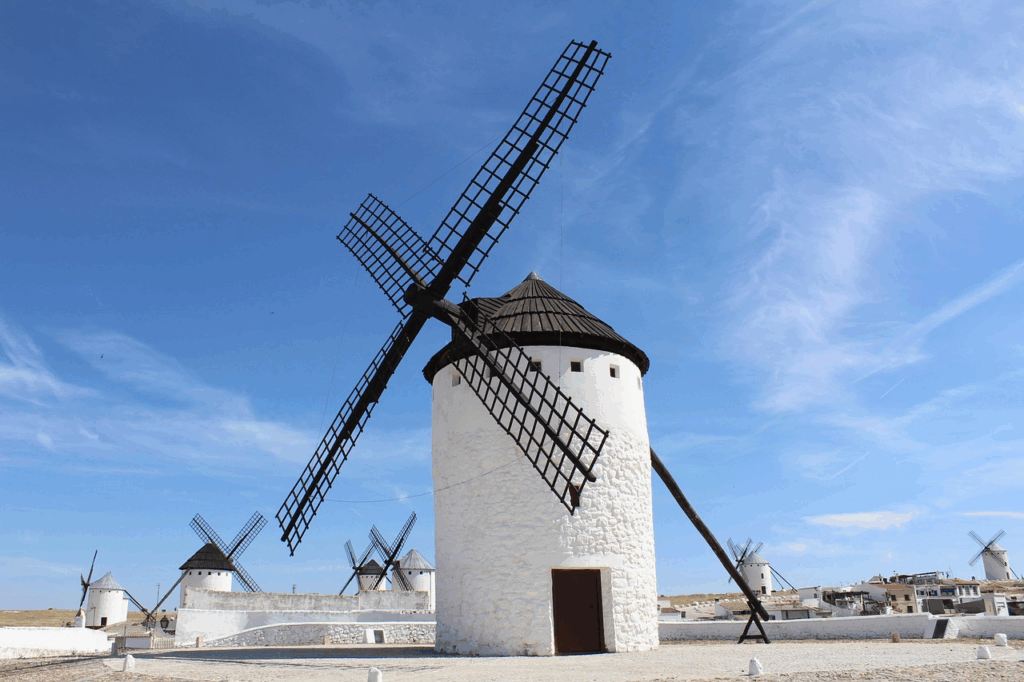
Few images capture the spirit of El Quijote like the iconic windmills of Consuegra and Campo de Criptana, near Cuenca. These towering giants have stood sentinel over the flatlands for centuries, their wooden sails creaking against the dry wind.
They aren’t just props from a story—they’re monuments to a way of life, echoes of a time when wind powered the milling of grain and shaped the livelihoods of entire communities.
Walking among them, it’s easy to imagine Don Quixote charging one with lance raised, the blurred line between madness and heroism shimmering in the heat haze.
The Natural Beauty of Cuenca’s Hinterlands
Beyond the windmills, Cuenca’s landscapes offer a richer canvas. The Serranía de Cuenca, with its limestone cliffs, deep gorges, and wild pine forests, provides the rugged backdrop for many of Cervantes’ imagined adventures.
This region’s natural beauty isn’t just scenic—it’s elemental. The wind that sweeps the plains, the golden fields of wheat, and the quiet villages frozen in time together create a sensory experience that brings El Quijote’s world alive.
Places That Inspired a Masterpiece
Cervantes lived through the early 1600s when Spain was changing fast—yet the landscapes around Cuenca remained timeless. The villages of El Toboso (home to Dulcinea’s character) and Puerto Lápice still preserve their historic charm, offering travelers a glimpse into the daily life that shaped the novel’s characters.
In these towns, you’ll find rustic inns, narrow stone streets, and the scent of lavender and rosemary carried by the wind—ingredients that fueled Cervantes’ imagination and continue to inspire visitors today.
Mota del Cuervo: The Windmill Town of La Mancha
Nestled in the heart of La Mancha, Mota del Cuervo is a living postcard of Spain’s literary and natural heritage. Known as the “Windmill Capital of La Mancha,” the town proudly displays a collection of beautifully preserved windmills, perched like silent sentinels on the hills that inspired Cervantes’ Don Quixote.
Unlike some touristy spots, Mota del Cuervo offers an authentic, quiet charm—where stone streets and whitewashed houses lead to panoramic views of endless plains, punctuated by the slow turning of giant wooden sails.
Visiting Mota del Cuervo feels like stepping into the very pages of El Quijote, where history, myth, and landscape swirl together under the ever-present Castilian sky.
A Journey Beyond the Pages
Traveling through Cuenca’s El Quijote landscapes is not just a walk through history—it’s an invitation to experience the spirit of adventure, idealism, and sometimes folly that Cervantes so masterfully captured.
It’s a reminder that stories live not just in books but in the land itself—in the windmills turning, the plains stretching, and the sunsets that have witnessed centuries of dreams and duels.
Leave a Reply