
There is a place on the rocky slopes of the Absheron Peninsula, near Baku, where the earth seems to exhale flame. At Yanar Dağ the gas-seep beneath the sandstone keeps a fire alight in daylight or darkness—as though the mountain itself were determined never to sleep.
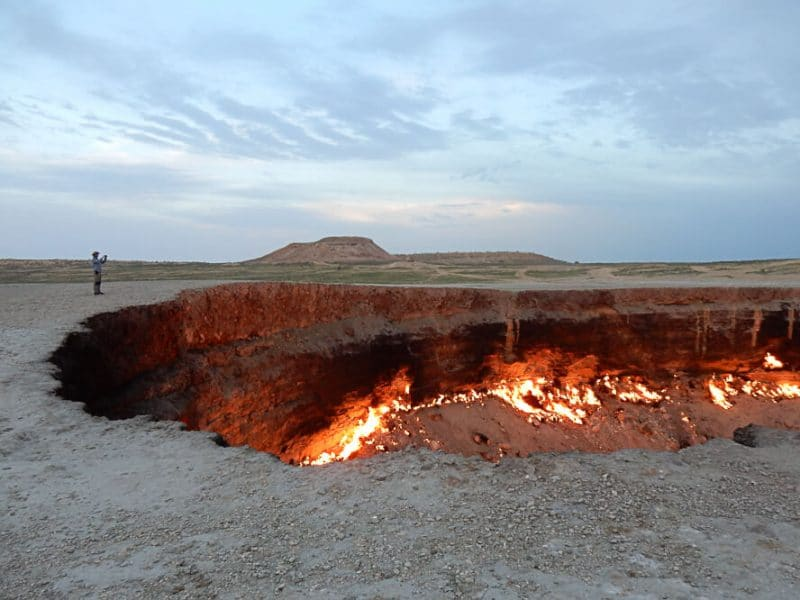
A Natural Beacon of Light and Legend
Yanar Dağ isn’t simply a tourist novelty: it is a geological and cultural phenomenon. Flames rise steadily—sometimes up to three metres—fed by a porous layer of sandstone through which natural gas seeps. In a country whose poetic name “Land of Fire” comes from these very phenomena, the mountain stands as a symbol of continuity, mystery and raw nature.
When Fire Speaks of Time
To stand next to the blaze is to feel time stretch. The flicker of the flame remembers ancient footsteps, caravans, and the scent of oil lamps in early dawns. Yanar Dağ reminds us that some fires are not meant to be extinguished, but to bear witness.
Visiting the Flame: Tips for the Traveler
- Best to visit at dusk, when the surrounding dusk light makes the blaze stand out as if the rock had caught fire itself.
- The site has a museum and pathways; stay safe, keep a respectful distance from the seep.
- Pair the visit with evening in Baku’s old town, narrow alleys, and street-lamps, to contrast the urban glow with the primal blaze of the mountain.
Reflection: What the Fire Teaches Us
In a world obsessed with turning off, clearing out, extinguishing, Yanar Dağ quietly persists. It says something about endurance, the unseen support of nature (the gas beneath), and our relationship with forces far larger than us. It invites the traveler to pause: to see that not everything has to end. Some things stay alight.
Leave a Reply